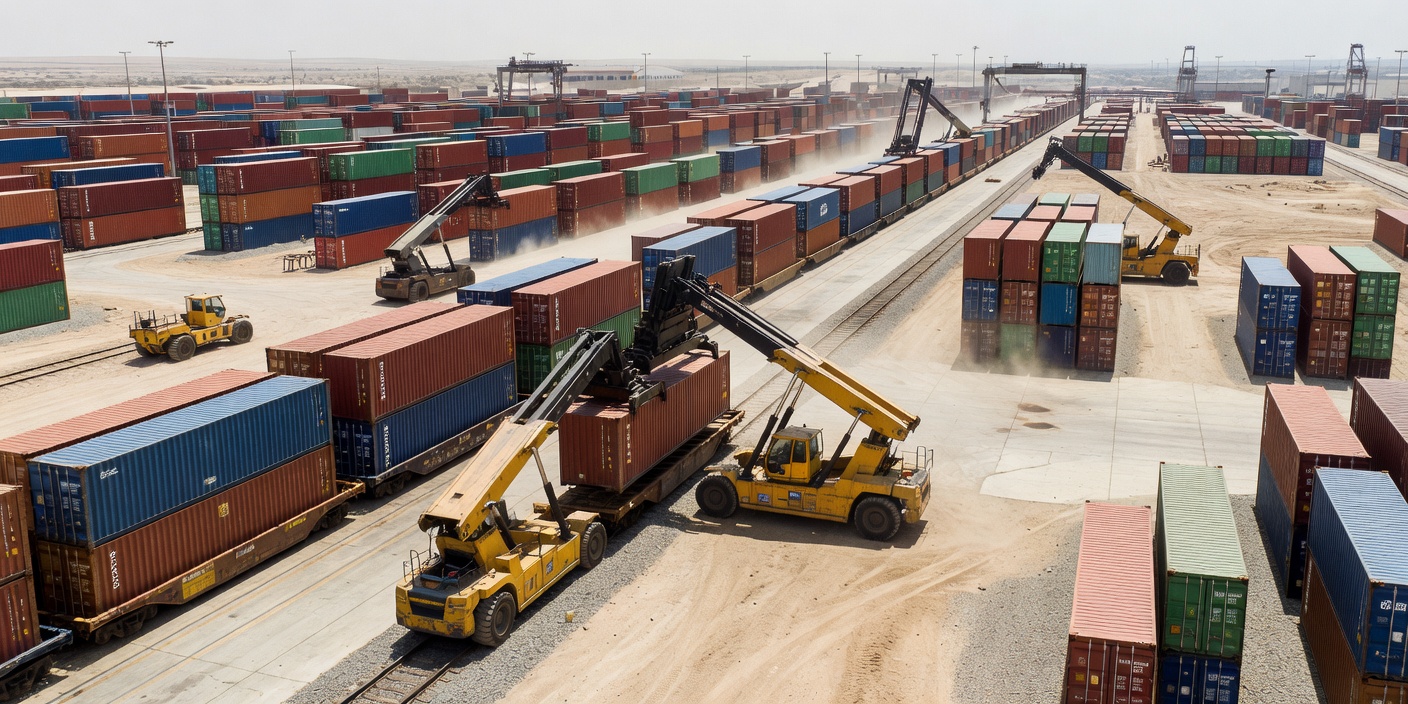
1. The Dry Port Concept (Inland Terminal)
An inland dry port is a multimodal terminal located in the interior of a country, connected directly to a coastal seaport by high-capacity rail or inland waterway services. Key capabilities include:
- Extended Gate Clearance: Containers can be moved immediately from coastal terminals to the inland dry port under a single customs transit document (T1), delaying final import duty clearance until closer to consumption.
- Empty Container Depots: Shipping lines maintain inland empty return depots, enabling regional exporters to collect empty boxes without sending trucks back to the coast.
- Buffer Storage: Significantly lower land costs allow longer container dwell times compared to premium coastal berths.
2. Hinterland Node Comparison
| Facility Type | Modal Integration | Primary Role | Dwell Profile |
|---|---|---|---|
| Rail Freight Terminal | Rail / Road | Intermodal container transfer; block train breakdown | Short (12 – 48 hours) |
| Barge Port (Tri-modal) | Barge / Rail / Road | Bulk and container handling along navigable rivers | Medium (2 – 7 days) |
| Cross-Dock Center | Road / Road | Rapid de-consolidation and regional pallet dispatch | Ultra-short (under 12 hours) |
| Bonded Warehouse Depot | Road / Rail | Duty-suspended inventory holding and value-add packing | Long (weeks to months) |
3. Mitigating Congestion and Bottlenecks
European hinterland transport suffers from three main structural bottlenecks:
First-Mile Gate Queues: High truck arrival peaks at coastal ports during late afternoon shifts cause highway backups. Solution: Extended gate opening hours and strict slot management.
Rail Path Sharing: In countries like Germany and France, freight trains share track access with high-priority passenger rail. Freight paths are often bumped during daytime peaks, requiring overnight transit scheduling.
Chassis & Equipment Imbalance: Exporting industrial areas often experience a shortage of empty containers, while consumer metropolitan regions have surpluses that require re-positioning.
Operational Check: Hinterland Planning
Good For
- Utilizing inland dry ports to bypass high coastal demurrage and storage penalties.
- Choosing tri-modal distribution parks with direct access to navigable rivers and rail.
- Positioning regional distribution hubs along central European motorway axes.
What to Check
- Presence of licensed customs bonded warehouses (Type C/D/E) at the inland terminal.
- Maximum bridge height clearances and allowable gross train weight limits on branch rail lines.
- Reach-stacker axle load capacity on unpaved secondary inland transfer yards.
Related Technical Guides
Review comprehensive routing parameters from entry port to destination: