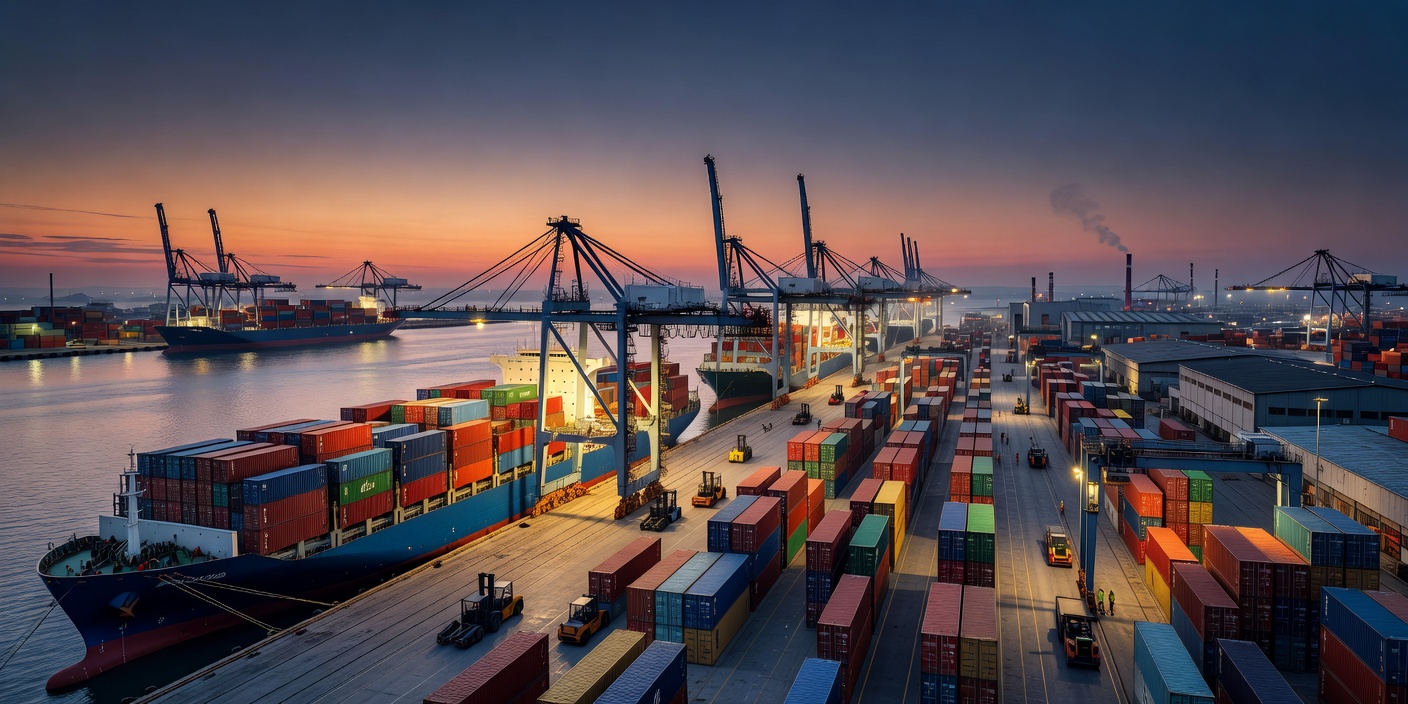
1. Geographic Basins & Port Clustering
European ports operate within geographically defined basins with specific physical and navigational attributes:
- North Sea Range: Heavy concentration of deepwater container terminals and industrial bulk ports. Features tidal locks, major river estuaries (Scheldt, Rhine, Elbe), and high-density industrial hinterland links. Real-world gateway nodes include Rotterdam, Antwerp-Bruges, and Hamburg.
- Baltic Sea Basin: Semi-enclosed brackish waters subject to seasonal ice rules in northern segments. Actively linked by feeder loops from North Sea mother terminals and strong Ro-Ro ferry routes connecting Sweden, Finland, and Poland (such as Gdańsk and Gothenburg).
- Mediterranean Gateways: Direct proximity to the Suez-Gibraltar main east-west shipping lane. High transshipment ratios combined with direct gateway ports serving southern and central Europe, including Valencia and Piraeus.
- Atlantic Arc: Direct ocean exposure with strong tidal variations and weather windows. Key gateways for transatlantic routes and bulk trade servicing western Iberian and French industrial corridors.
2. Cargo Specialization Across European Quays
European ports do not operate as universal cargo handlers. Facilities are divided into specialized technical disciplines:
| Cargo Category | Vessel Class | Infrastructure Prerequisite | Typical European Hub Role |
|---|---|---|---|
| Container (TEU) | ULCV (18k–24k TEU) / Feeders | 14–18m draft, high-outreach STS cranes | North Sea & Med mother hubs, Baltic feeders |
| Roll-on / Roll-off (Ro-Ro) | Ro-Ro ferries, Pure Car Carriers | Hydraulic linkspans, broad marshalling yards | Cross-channel, Baltic, and short-sea routes |
| Liquid Bulk | VLCC, product tankers, LNG | Jetties, pipeline manifolds, tank farms | Refinery complexes, LNG gas terminals |
| Dry Bulk | Capesize, Panamax bulkers | Grab unloaders, continuous bucket elevators | Steelworks, agricultural silos, coal docks |
3. Gateway Versus Transshipment Roles
Understanding port functionality prevents routing errors. A port can serve two core functions:
Gateway Ports: The majority of unloaded cargo is cleared through customs and moves directly into the inland hinterland via rail, barge, or truck. These ports require high-capacity road gates and on-dock rail intermodal yards.
Transshipment Hubs: Cargo unloaded from Ultra-Large Container Vessels (ULCV) does not enter the immediate inland market. It is shifted across the quay to smaller feeder ships bound for peripheral ports in Scandinavia, the Baltic, or North Africa. Dwell time in the yard is determined by connecting vessel schedules rather than highway gate throughput.
Operational Check: Port Suitability
Good For
- North Sea range for direct access to European core industrial markets.
- Baltic terminals for consolidated Scandinavian and Baltic state delivery.
- Mediterranean quays for shorter transit times on Far East imports through the Suez Canal.
What to Check
- Vessel draft limits at low tide and estuarine navigation restrictions.
- Feeder service rotation frequencies for secondary destination transshipment.
- On-dock rail connectivity to avoid costly off-dock drayage transfers.
Related Technical Guides
Expand operational analysis across the port logistics lifecycle: